
Knit without turning the fabric. Free pattern is a revolutionary concept for both beginners and seasoned crafters looking to simplify their knitting process. This technique removes one of the most time-consuming parts of traditional knitting: turning the work at the end of every row. Whether you’re creating scarves, blankets, or stylish garments, learning to knit without turning the fabric can significantly improve your speed, consistency, and enjoyment.
Many knitters find the action of turning the fabric awkward, especially when working with bulky yarns or intricate stitch patterns. With this method, your hands stay in a natural position, and you maintain a continuous workflow. What’s even better? We’re offering a free pattern to get you started right away, so you can see for yourself just how game-changing this technique can be.
In this article, we’ll walk you through what it means to knit without turning the fabric, the benefits, step-by-step instructions, common applications, and how you can start using our free pattern to practice today. We’ll also answer frequently asked questions to help clarify any confusion you may have. Whether you’re a hobbyist or a professional, this guide is designed to support and inspire your creative journey.
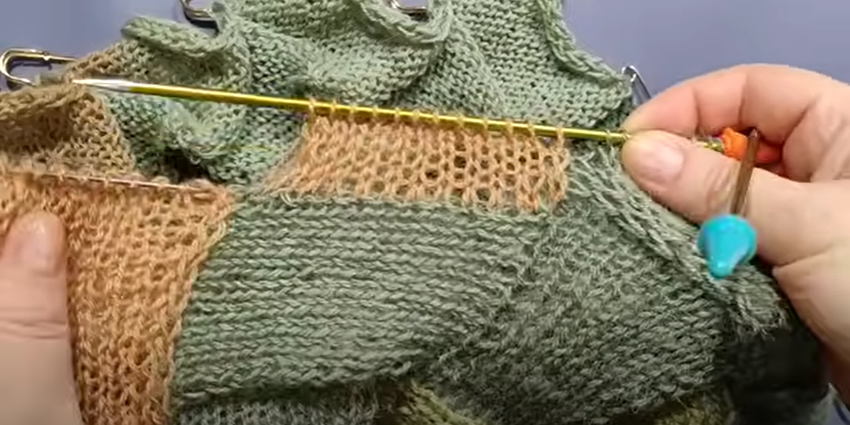
What Does It Mean to Knit Without Turning the Fabric?
To knit without turning the fabric means that you continue to work in the same direction without flipping your project at the end of every row. This technique is often referred to as “knitting backwards” or “mirror knitting,” but it’s not as complicated as it sounds. You’re simply executing knit stitches from left to right instead of the traditional right to left (for right-handed knitters).
One of the key advantages of this method is that it keeps your yarn on the same side, allowing for faster knitting. This is particularly useful when working with double-pointed needles, circular patterns, or projects that require consistent tension. Once mastered, it feels just as natural as regular knitting.
Another great benefit is the reduction of hand strain. Constantly turning the fabric can lead to fatigue, especially for large projects like afghans or shawls. When you knit without turning the fabric, your wrists and fingers follow a more ergonomic motion. This makes it easier to knit for longer periods without discomfort.
This technique is also excellent for visual learners who want to see their progress from one consistent angle. Since you’re always facing the front of the work, it’s easier to catch mistakes and admire your design in real time. If you’ve ever gotten lost after flipping your project, this method could be your new best friend.
The free pattern we include later in this article is tailored to help you learn by doing. It’s simple enough for beginners, yet offers a rewarding experience for experienced knitters. You’ll quickly discover how this technique can be used in a variety of patterns and creative applications.
Don’t be intimidated by the idea of reversing your technique. With just a bit of practice, knitting without turning the fabric can become second nature. Let’s explore how to do it step by step so you can start your next project with confidence.
How to Knit Without Turning the Fabric
To begin with this technique, start by practicing on a small swatch using your favorite yarn and a pair of straight or circular needles. It’s essential to choose a yarn that’s easy to see—something smooth and light-colored is ideal for beginners who want to clearly see their stitches.
The core concept is simple: instead of flipping your work at the end of a row, you work back across the stitches from the opposite direction without turning. This is done by knitting “in reverse,” or from left to right. You insert your left needle into the back of the stitch on the right needle and knit it, just like you would normally—but from the opposite side.
You may find the movement a bit awkward at first. This is normal. Give yourself time to adjust. Keep your tension even and resist the urge to revert to traditional knitting habits. Soon, your hands will develop the muscle memory required for smooth, efficient stitches.
To master the tension, try the free pattern we’ve provided, which includes clear instructions and stitch counts to keep you on track. It’s designed with repetition in mind, so you’ll quickly get used to the flow of knitting without turning the fabric.
If you’re using a pattern that includes purl rows, this technique can still work. Many knitters use it to eliminate purling altogether by knitting back and forth in garter stitch. Others adapt stockinette stitch patterns by practicing reverse purling. The flexibility of this method makes it compatible with a wide range of designs.
With a bit of dedication, you’ll find yourself breezing through rows that used to take double the time. This technique is perfect for scarves, dishcloths, and even more advanced garments that require continuous knitting. Let’s take a look at some practical ways to incorporate this into your regular knitting routine.
Practical Uses for the Knit Without Turning the Fabric Method
One of the best ways to apply the knit without turning the fabric method is in the creation of flat-knit scarves. Scarves often have long, repetitive rows, and turning the fabric each time can be tedious. By using this method, you’ll finish scarves more quickly and with greater consistency in tension.
Blankets and afghans are another great use case. These projects are typically large and heavy, making frequent flipping impractical. Knitting without turning keeps the bulk of the work in your lap and your workflow uninterrupted. It’s a more enjoyable way to work through large projects.
Another area where this technique shines is in lacework. Lace patterns often require you to see the front of the work to ensure that yarn overs and decreases are placed correctly. By always facing your work, you gain better control over the placement of each stitch.
For crafters who sell their work, the speed gained from this technique can be a significant advantage. More output in less time means increased productivity without sacrificing quality. The free pattern can serve as a base for multiple product variations, allowing for a full collection of items built on one efficient technique.
Teaching this method to new knitters is also easier than you might expect. Because the method simplifies motion and reduces the chance for tangling or confusion, it’s ideal for classes and tutorials. Many instructors use this approach to help students quickly build confidence.
Finally, advanced knitters have started using this method in complex colorwork patterns, such as intarsia or fair isle, where seeing the front of the work continuously is beneficial. Knitting without turning the fabric keeps the color transitions smooth and your stitches uniform throughout the piece.
Step-by-Step Free Pattern to Practice the Technique
This simple free pattern was designed specifically to help you practice the knit without turning the fabric method. It’s a dishcloth project—small, practical, and perfect for repetition.
Materials needed: Worsted weight cotton yarn, Size US 7 needles, tapestry needle for finishing.
Cast On: 30 stitches
Row 1: Knit all stitches (traditional right-to-left)
Row 2 (without turning): Instead of flipping, insert the left needle into the back of the first stitch on the right needle and knit. Continue this across all 30 stitches from left to right.
Repeat Rows 1 and 2 for 50 rows or until the square measures approximately 7 inches.
Bind Off: Traditional bind-off after a right-to-left row.
Finishing: Weave in the ends using your tapestry needle.
This pattern gives you the chance to build the habit of working stitches in both directions without flipping the project. Keep your stitches even and focus on comfort and technique rather than speed. Over time, your confidence will grow, and you’ll be ready to apply this method to larger and more complex projects.
FAQ – Frequently Asked Questions
1. What does it mean to knit without turning the fabric?
It means knitting each row without flipping your project around. You work in the reverse direction, so the fabric always faces the same way toward you.
2. Is this technique suitable for beginners?
Yes, beginners can learn this technique easily with a bit of patience. It simplifies motion and is especially helpful for small, repetitive patterns.
3. Can I use this method with all yarn types?
Yes, but starting with a smooth, non-fuzzy yarn helps you see the stitches better. Once you’re comfortable, you can use this technique with any yarn type.
4. What kinds of patterns work best with this method?
Flat patterns like scarves, blankets, and dishcloths work well. It’s also ideal for lacework and colorwork where visibility is crucial.
5. Do I need special needles to knit without turning?
No, standard straight or circular needles work fine. The technique is more about how you move your yarn and needles than the tools you use.
6. Can this technique replace purling?
In many patterns, yes. By knitting back and forth without turning, you can eliminate purl rows in garter stitch and adapt stockinette patterns accordingly.
Conclusion
Learning how to knit without turning the fabric. Free pattern techniques like the one we’ve shared here open up a world of possibilities for knitters of all skill levels. You can improve your speed, reduce physical strain, and maintain a steady rhythm with your work always facing you. The benefits are especially noticeable in larger or more intricate projects, and it gives you more control and creativity in your knitting.
We hope this guide has inspired you to give this method a try. Start with our free pattern, and see how quickly you adapt to this game-changing approach. If you’ve tried it, or if you have tips, suggestions, or ideas to improve this content, we’d love to hear from you. Leave your honest opinion and let us know how we can make this even better for your knitting journey!